A routine dental visit is about more than checking for cavities or polishing your teeth. Oral cancer screening at the dentist gives your dental team a chance to look for unusual changes in the mouth, tongue, throat, and surrounding tissues – often before they become painful or obvious.
For many people, this screening takes only a few minutes as part of a regular examination. It is gentle, straightforward, and can offer valuable peace of mind. If something does not look typical, finding it early creates more options for prompt assessment and care.
What Is Oral Cancer Screening at the Dentist?
Oral cancer screening is a visual and hands-on examination of the areas where abnormal cells and lesions can develop. Your dentist checks the lips, cheeks, gums, tongue, floor and roof of the mouth, jaw, and areas of the throat that can be seen during an exam.
The purpose is not to diagnose cancer during a routine appointment. Rather, it is to identify changes that may need monitoring, a follow-up visit, or referral for further assessment. Many mouth sores and white or red patches have harmless causes, including irritation, trauma, infection, or dental appliances. Still, changes that persist deserve professional attention.
This is one reason regular dental examinations matter even when your teeth feel fine. Some oral health concerns do not cause discomfort at first, and early changes can be easy to miss when you are only looking in the mirror.
What Happens During the Screening?
Your dentist will begin by asking whether you have noticed symptoms such as a sore that will not heal, trouble swallowing, numbness, a persistent sore throat, or a change in your voice. They may also ask about tobacco use, alcohol intake, sun exposure to the lips, medical history, and any previous oral lesions.
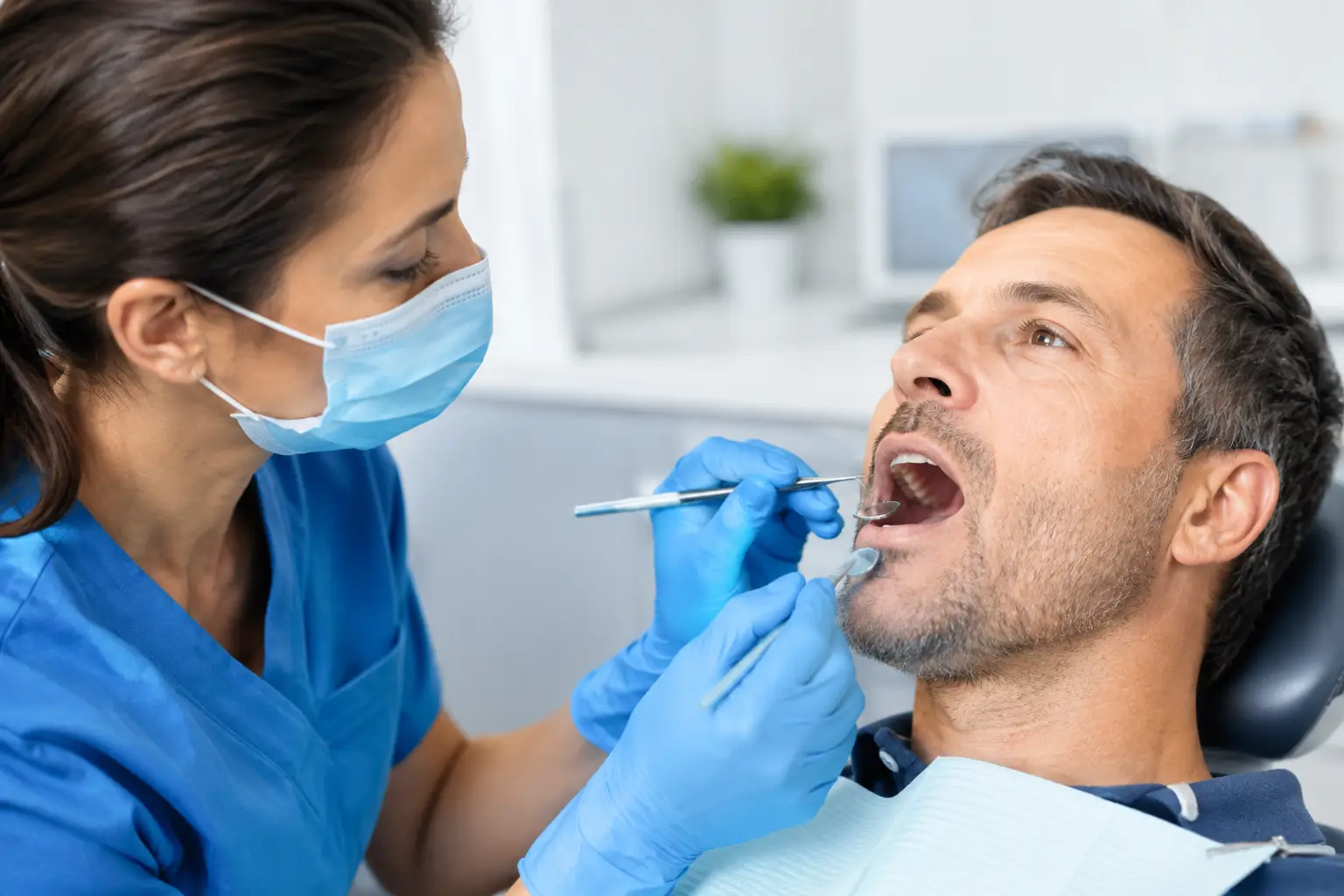
The examination itself is usually quick and non-invasive. Your dentist looks carefully at the soft tissues of your mouth under good lighting, sometimes using a small mirror or gauze to gently move the tongue. They may feel along the jaw, neck, cheeks, and tongue to check for lumps, swelling, tenderness, or unusual firmness.
Digital X-rays remain useful for evaluating teeth, roots, and bone, but they do not replace a soft-tissue oral cancer screening. A thorough dental visit uses the right tools for different concerns, including a direct visual and tactile exam of the mouth.
Changes Worth Booking an Appointment For
You do not need to wait for your next hygiene visit if something in your mouth has changed. A sore, ulcer, or area of irritation that has not improved within two weeks should be assessed, particularly if you cannot identify a clear cause.
Other symptoms to watch for include red or white patches, a lump or thickened area, unexplained bleeding, ongoing pain, difficulty chewing or swallowing, numbness in the lip or tongue, or a denture that suddenly no longer fits comfortably. A persistent hoarse voice, ear pain without an ear infection, or swelling in the neck can also warrant a conversation with a healthcare professional.
These symptoms do not automatically mean cancer. Gum disease, a sharp tooth edge, accidental biting, ill-fitting dentures, infections, and other common conditions can cause similar signs. The key is not to self-diagnose or ignore a change that lingers.
Who Benefits From Regular Screening?
Every adult can benefit from routine oral examinations, and screening is particularly valuable because oral cancer can affect people with no obvious risk factors. Age, health history, and lifestyle can influence individual risk, but no single factor tells the whole story.
Tobacco use, including cigarettes, cigars, chewing tobacco, and vaping products containing nicotine, can increase risk. Heavy alcohol use and the combination of alcohol and tobacco are also associated with a higher risk. Human papillomavirus, or HPV, is linked to some cancers of the throat and back of the mouth. Long-term sun exposure can affect the lips, especially the lower lip.
People who have had oral cancer before, have a weakened immune system, or notice recurring lesions may need more individualized follow-up. Your dentist can discuss what makes sense for your circumstances without making assumptions or causing unnecessary worry.
Why Regular Dental Visits Can Make a Difference
The mouth changes over time. A spot that was not present six months ago may be easy for a dentist to notice because they have a record of your oral health and can compare what they see with previous visits.
Regular care also helps address issues that can mask or mimic concerning symptoms. For example, treating gum inflammation, smoothing a broken tooth edge, adjusting a denture, or managing dry mouth can reduce ongoing irritation. If an area does not improve after the likely cause is addressed, your dentist can decide on the appropriate next step.
For families, routine appointments also build a useful prevention habit. Children and teens may not need the same risk-based conversations as older adults, but regular examinations help them become comfortable with dental care and give parents a trusted place to ask questions as their needs change.
If Your Dentist Finds Something Unusual
Finding an unusual area does not mean you should expect the worst. Your dentist may first document the size, colour, location, and appearance of the area, then recommend a review after a short healing period. This approach can be appropriate when there is a likely source of irritation, such as a cheek bite or a rough filling.
If a change looks suspicious, persists, or cannot be explained, your dentist may recommend referral to an oral surgeon, physician, or another specialist. Further evaluation may involve additional examination, imaging, or a biopsy. A biopsy is the only way to confirm whether abnormal cells are present.
It can feel unsettling to hear that a lesion needs follow-up. Clear communication helps: ask what was observed, what may be causing it, when you should return, and what symptoms should prompt an earlier call. A good care plan should leave you knowing exactly what happens next.
Make the Most of Your Appointment
Before your visit, make a note of any sore spots, changes in sensation, or symptoms that come and go. Mention when you first noticed them and whether they have changed. If you smoke, vape, use tobacco, drink alcohol regularly, or have a relevant medical history, sharing that information helps your dental team provide more tailored guidance.
At Onyx Dentistry, routine examinations are approached as part of your larger oral health picture, not as a rushed checklist. Whether you are booking a family checkup, managing gum concerns, replacing missing teeth, or coming in because something feels different, the goal is to provide calm, attentive care and clear next steps.
If it has been a while since your last dental examination, or you have a mouth change that has lasted more than two weeks, booking an appointment is a practical place to start. Early attention does not create alarm – it gives you answers and helps protect your health.